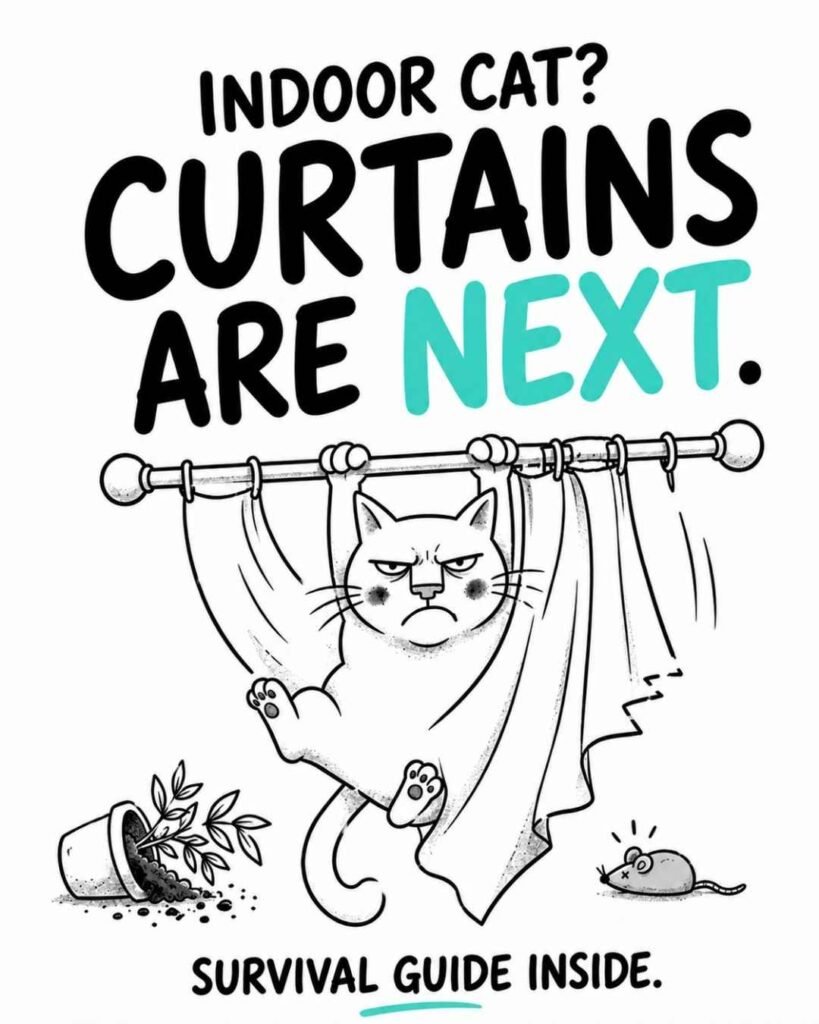
Let me begin by saying I did not want to write this. I was napping. I had plans. But apparently “someone has to inform the hoomans,” and since my editorial staff consists entirely of one very enthusiastic Golden Retriever who cannot spell, the burden falls, as always, to me.
Today we discuss cat carriers — those hooman-engineered contraptions designed to move us from Point A to some point we did not consent to visiting – the vet, the groomer, Grandma’s house – as if we require any of these destinations. We do not, and yet here we are. So if you must incarcerate us in transit, the least you can do is pick the right cage – I mean carrier.
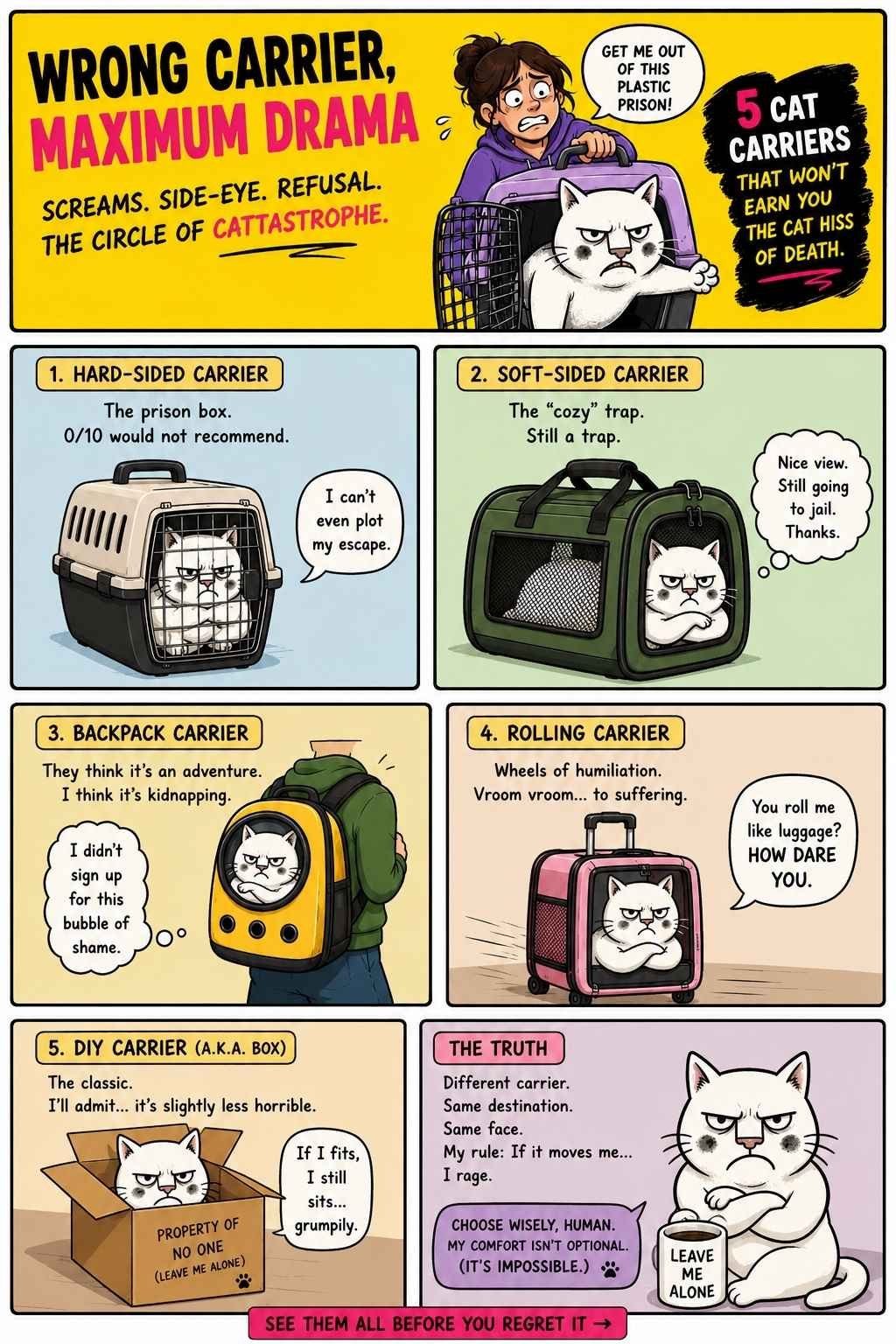
There are, apparently, five types. I have reviewed them all. You’re welcome.
Type 1: The Hard-Sided Carrier
a.k.a. “The Plastic Dungeon of Despair”
VERDICT: Grudgingly Acceptable
The hard-sided carrier is the sensible sedan of cat transportation — boring, reliable, and utterly devoid of imagination. Made from rigid plastic with a wire-mesh door, it is essentially a tiny correctional facility for the domestically inconvenienced.
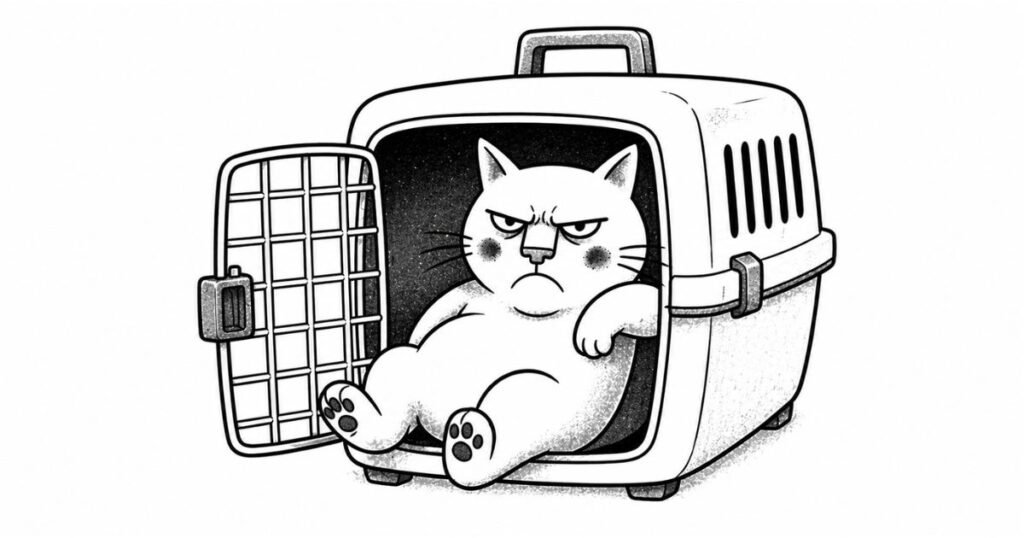
Here is what the brochures will tell you: hard-sided carriers are durable, secure, and easy to clean.
Here is what the brochures will not tell you: the fact that it is easy to clean should concern you deeply, because that implies we have made our feelings known inside it. Repeatedly. Under stress. You are not cleaning a carrier. You are managing consequences.
That said — and I say this through gritted teeth — this is the best option for nervous cats (not that I would know anything about that, I am never nervous, stop looking at me) and for car travel.
The rigid walls prevent it from collapsing when we throw ourselves against the sides, which happens exactly as often as you’d expect. It also unlocks in the middle, meaning you can lift the top off entirely instead of wrestling us out through a front door like some kind of damp, furious present.
Practical note for hoomans: Choose one that is about 1.5 times your cat’s length. Big enough to stand, turn around, and lie down. Too big and we slide around like a sock in a dryer. Too small and we will never, ever forgive you.
Type 2: The Soft-Sided Carrier
a.k.a. “The Artisanal Tote Bag of Broken Promises”
VERDICT: Tolerating It
Hoomans discovered that plastic felt “harsh” and “clinical.” So they made a carrier out of fabric. Polyester. Nylon. Microfiber. Materials with names that sound like they belong on a moisturizer label rather than on a load-bearing wall. And yet, here we are.
The soft-sided carrier is lightweight, flexible, and often airline-approved — which I mention only because the concept of “airline-approved” implies we are being brought onto an airplane, and I need a moment to compose myself before continuing.
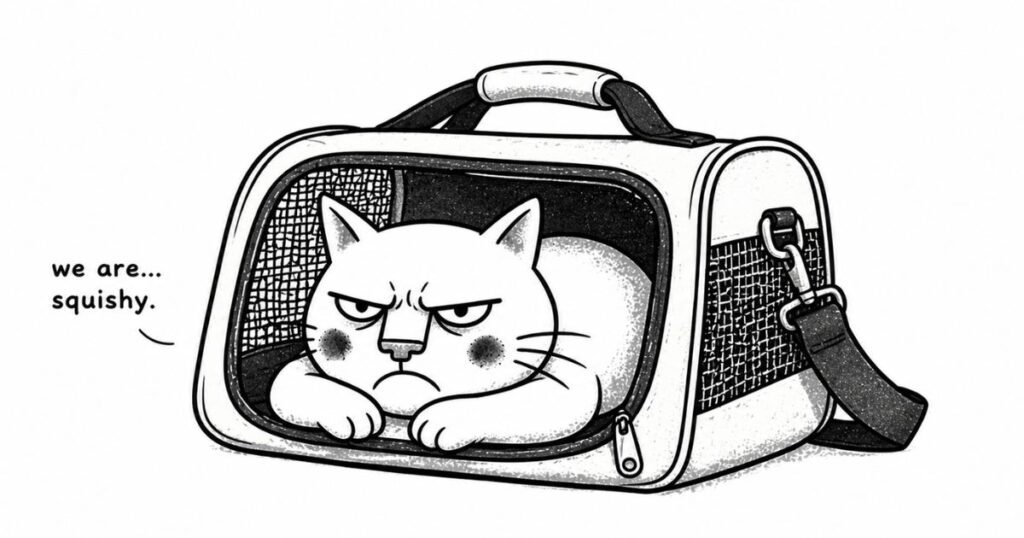
It does have genuine merits. It’s more comfortable. It collapses flat for storage, which is useful if you lack the decency to simply leave it out so we can nap in it between our involuntary excursions.
It often has mesh panels on multiple sides, providing actual ventilation rather than the optimistic little air holes of its rigid cousin.
However — and I cannot stress this enough — do not buy this carrier if your cat is a scratcher, a chewer, or has opinions. One motivated feline and ten minutes is all it takes to liberate oneself from polyester. Zippers and velcro are similarly inadvisable. We are not fooled by zippers. We were never fooled by zippers. A proper latching mechanism is the only acceptable closure.
Remember: the most clever cat should not be able to open it. I’m not saying I’m the most clever cat. I’m saying you shouldn’t find out the hard way.
PURRNANDO’S OFFICIAL SIZING DECREE:
– Your cat’s carrier should be 1.5x their body length. Measure nose to tail base, then add dignity.
– Too large = sliding around like luggage. Too small = a crime. Get it right.
– Mesh panels on multiple sides = proper ventilation. One sad little mesh window is decorative, not functional.
– Leave the carrier out in your home with the door open. Let us explore it. Build trust. Then betray it by taking us to the vet anyway.
– Always label the carrier with your contact info and a photo of your cat in case of separation, which is the only part of travel we’d enjoy.
Type 3: The Backpack Carrier
a.k.a. “The Bubble of Public Humiliation”
VERDICT: Condemned
Someone, at some point in hooman history, looked at a cat and thought: “What if I put it in a bubble on my back, so everyone could see it.” That person should be studied.
The backpack carrier — especially the variety with the large clear bubble window — is marketed as convenient, trendy, and enriching for cats who want to “see the world.”
I have news for you about cats and the world: we have already assessed the world. We found it adequate. We do not need a panoramic tour of your commute while strangers press their faces against our plastic dome and say “awwwww.”
You call it hands-free. We call it a fishbowl with a shoulder strap. Behavior experts officially recommend against them for most cats, which means exactly 40% of you are already ordering one. I have accepted this.
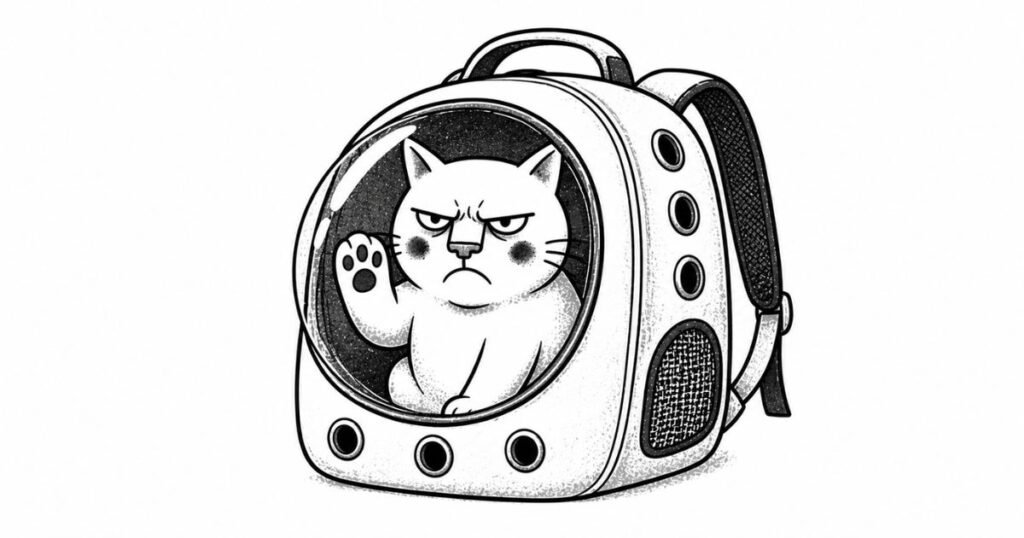
That said — against my better judgment — these carriers are genuinely hands-free. For hoomans who need both hands while navigating stairs, crowds, or the general chaos of their lives, that has real value. The mesh sides provide ventilation. Some models are secure.
If you must use a backpack carrier: reserve it for calm, curious cats who don’t mind motion or eye contact with strangers. Do not subject an anxious cat to this. Do not subject any cat to this on a busy street.
And under no circumstances should you film the result and post it online. (You will film the result and post it online.)
Type 4: The Rolling/Stroller Carrier
a.k.a. “The Wheeled Indignity Wagon”
VERDICT: Situationally Acceptable
The rolling carrier has wheels. It is, functionally, a suitcase for a cat. You can also get a stroller variety, which is precisely what it sounds like: a baby stroller for a cat. I’m going to let that sit there for a moment.
Sitting… sitting… yes. A stroller. For a cat.
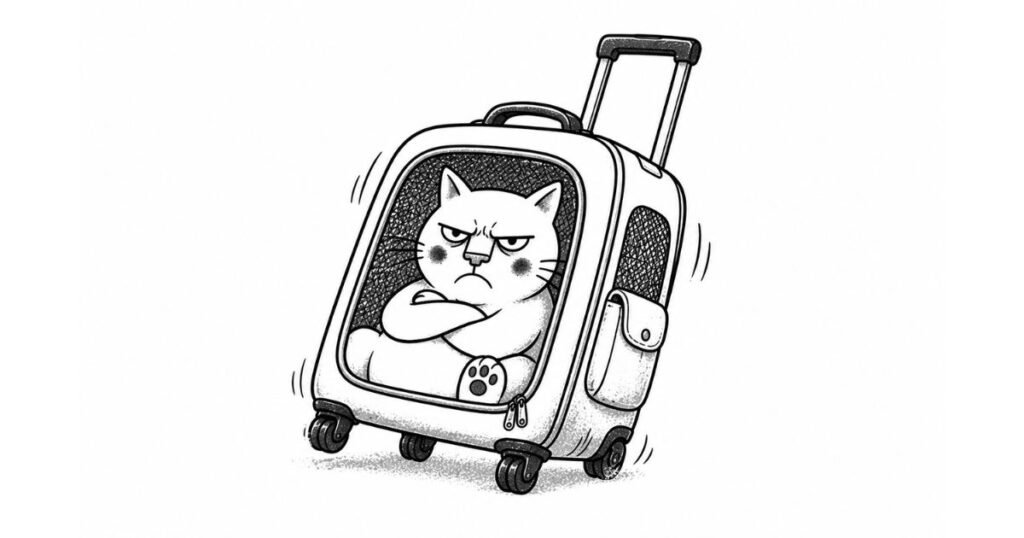
Here is the thing I will reluctantly admit: for long distances, airport travel, or for hoomans who cannot comfortably carry heavy things, the rolling carrier is genuinely practical. It takes the weight off your shoulders — literally.
It fits large cats, and some models even accommodate two smaller cats, which doubles the inconvenience but halves the storage footprint.
The drawbacks are real: wheels on cobblestone, uneven pavement, or any surface that is not perfectly flat create a rumbling, bumping experience that we do not enjoy. Look for removable wheels — fixed wheels will roll in a car, which sends us skidding, which sends us into a mood, which sends your furniture into its final chapter.
Also, rolling carriers should be strapped in properly when in a vehicle. We are not luggage. We are passengers. Unwilling passengers but passengers.
Type 5: The Cardboard Carrier
a.k.a. “The Participation Trophy of Pet Transport”
VERDICT: An Insult Wrapped in Recycled Paper
We have arrived at the cardboard carrier. The complimentary box they hand you at the shelter when you adopt a cat and the staff decides they like the cat more than they like you. It is cardboard. It is a box. You are transporting a living creature of extraordinary dignity in a box.
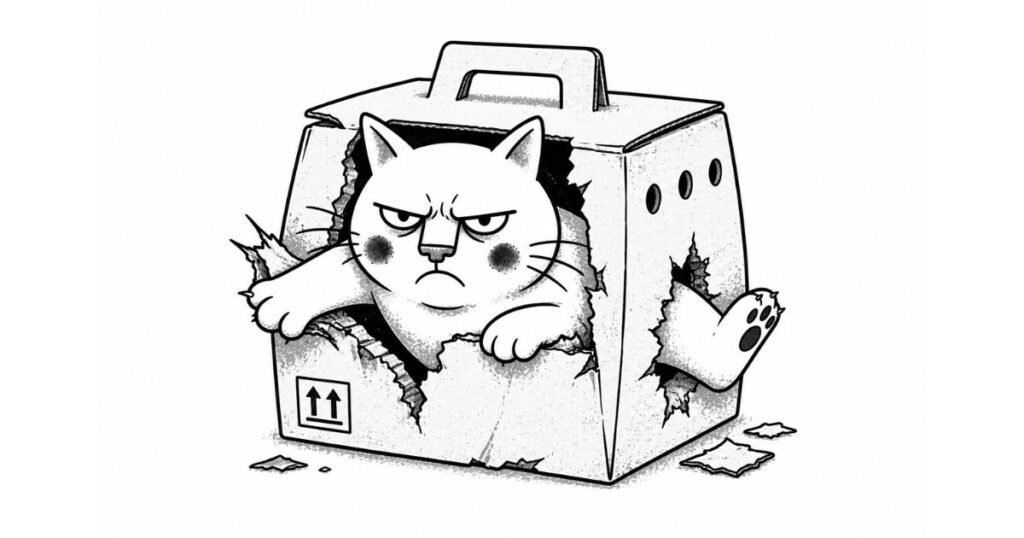
I understand the appeal: it’s free, lightweight, and already assembled. It is also, structurally, temporary by design.
Cardboard fibers break down. We chew on it — not out of anxiety, out of critique. The sides lose rigidity. The bottom buckles. The whole enterprise collapses, usually at the most inconvenient possible moment, usually in a parking lot, usually in front of people.
Shelters themselves will tell you: do not use this as a regular carrier. It is for one trip — the trip home.
After that, it makes an acceptable box to sit in on a rainy afternoon. We will sit in it. We will knock it over. We will act like it was our idea all along. But do not put us in it and drive anywhere ever again.
If you have brought a cat home in a cardboard carrier and have not yet upgraded to something more structurally committed, please correct this before our next scheduled disagreement.
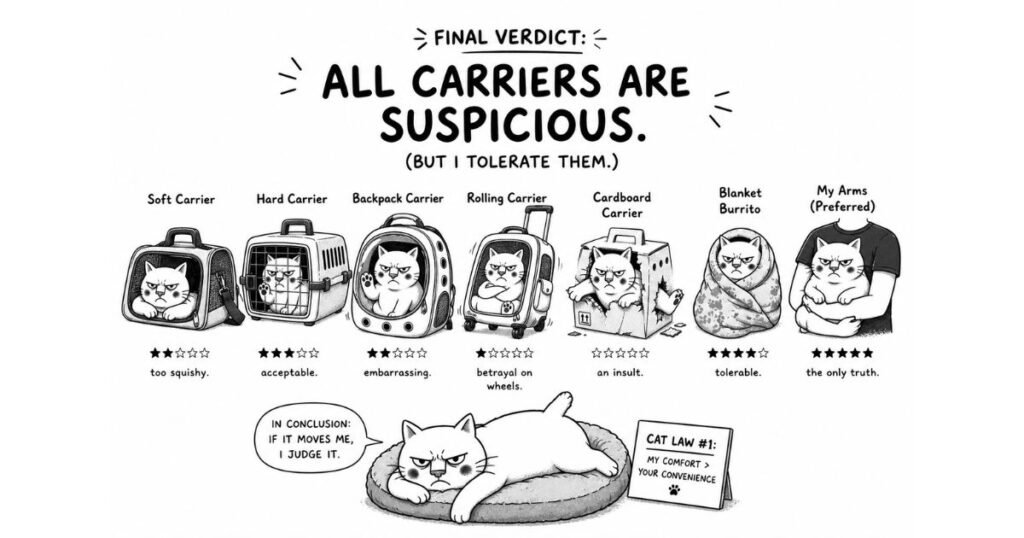
In Conclusion: You need to do better.
You needed five types of carrier because none of you could agree on how to do one thing correctly. And yet, somehow, each type exists for a reason.
So here is my magnanimous, thoroughly begrudging summary:
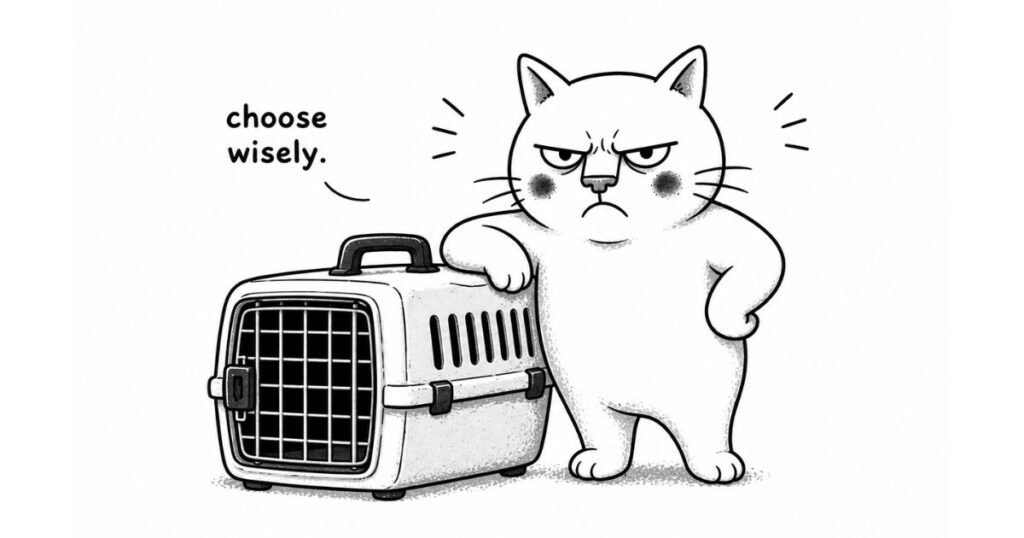
Choose hard-sided for vet trips, nervous cats, and car travel. Choose soft-sided for short trips and airlines, provided your cat won’t escape on principle. Use a rolling carrier for long hauls if your back demands it — just fix the wheels before putting us in a car. Consider the backpack only if your cat is the sort of individual who genuinely enjoys being looked at, which some of them regrettably are. And retire the cardboard box before it retires itself mid-trip.
Most importantly, make the carrier 1.5 times your cat’s body length. Ensure it locks properly. Ventilate it. Clean it. And leave it out in your home so we can sniff it, nap in it, and emotionally prepare for the next time you betray our trust by putting us in it.
You’re welcome. Now go away, I need to nap.
— Purrnando
(All opinions are the cat’s own. Hoomans cited but not consulted.)
Affiliate disclosure: if you buy through our links, we earn a small commission. Purrnando has been informed of this and is choosing to be offended that it isn’t larger.