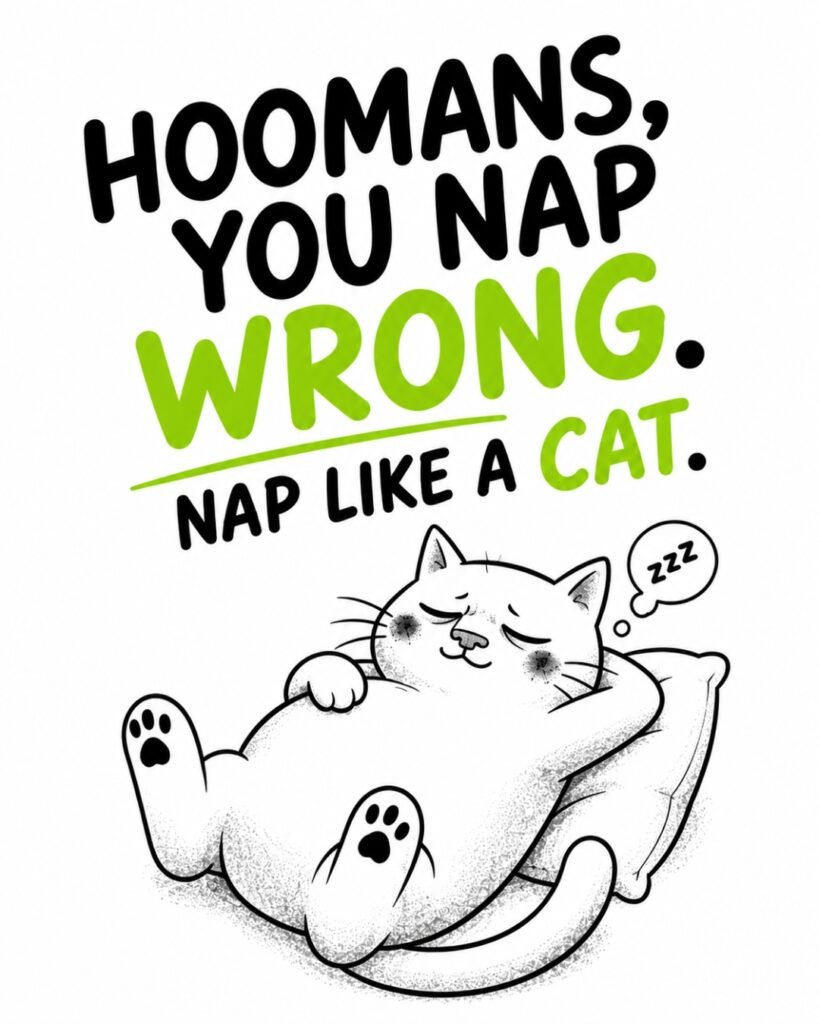
You found this article, which means one of two things: someone in your life is making it insufferable, or you are simply practicing for when they do. Either way, congratulations on your terrible taste in associates.
I am Purrnando — a cat of considerable refinement, moderate patience, and absolutely no tolerance for nonsense — and I am here, against my better instincts, to teach you what my kind has known since long before your species invented drama.
Cats do not argue. Cats do not over-explain. Cats do not lie awake in the small hours composing the perfect retort to something a coworker said at lunch. We assess a situation, find it beneath us, and leave. Not with a speech. Not with a slammed door. Simply — gone. A warm patch of sunlight awaits, and we have no interest in delaying it for the sake of someone’s ego.
You, however, keep engaging. You keep hoping that this time — this time — the toxic person will understand. They will not. They are far too busy being toxic. What they will understand is silence, distance, and the creeping suspicion that you no longer find them interesting. That, my poorly-trained human, is where your power lies.
“A cat never explains its departure. It simply departs. You should try this. Not right now, obviously — you have reading to do — but in general.” — Purrnando, speaking from experience
Mastering emotional detachment is not cruelty. It is not coldness. It is the quiet, dignified act of protecting your own peace — a resource so many of you squander like it is infinitely renewable. It is not. Every hour you spend orbiting a toxic person is an hour you are not napping, not pursuing a meaningful hobby, not luxuriating in your own company. These are hours I would have put to excellent use.
Here, then, are the four techniques my kind deploys instinctively, and which you will need to practice, because instinct, apparently, is not among your stronger suits.
Technique One: The Walk Away (Physical Distance)
I once watched a human spend 45 minutes arguing with another human about a parking space. I had completed two full naps, relocated to a superior windowsill, and eaten a small meal in that time. Neither human emerged happier. Neither parking space moved. It was an extraordinary waste of bipedal biology.
A cat, confronted by an irritant — an overly enthusiastic dog, a human who insists on baby-talking, a guest who smells of other cats — does not engage. The cat stands, stretches magnificently, and departs the room. No announcement is necessary. No explanation is owed. The body simply chooses elsewhere.
- Do not announce your departure. Declarations invite negotiation, and you are not a negotiator. You are someone who has somewhere better to be.
- Limit your proximity. When you spot them approaching, remember you suddenly have somewhere to be. “Oh, look at the time — I must be going.” Then go. Do not elaborate. The exit is the statement.
- Practice this until it becomes automatic. Cats do not deliberate over whether to leave an unpleasant room. Neither should you.
The beauty of physical distance is that it requires no confrontation, no courage, and no particularly witty parting words. It requires only legs — which I am told most of you have — and the wisdom to use them in the correct direction.
Technique Two: The Gray Rock (Emotional Detachment)
I confess I have occasionally yawned in a human’s face mid-conversation. Not from rudeness — or not entirely — but because the conversation held all the nutritional value of an empty bowl, and I saw no reason to pretend otherwise. The human seemed offended. They should have been inspired.
The gray rock method is the psychological equivalent of becoming a garden ornament: present, technically, but offering nothing of interest. Toxic people require your emotion as fuel. Your upset delights them. Your defensiveness feeds them. Your passionate rebuttal is, frankly, the most exciting part of their afternoon. So don’t give it to them.
- Remove the bait. Whatever emotion they are fishing for — indignation, fear, guilt, wounded pride — do not provide it. You are a rock. Rocks feel nothing. Rocks are not insulted. Rocks are, if we are being honest, doing quite well for themselves.
- Respond in the smallest possible units of language. “I see.” “Okay.” “Mm.” “Right.” These are complete sentences. You do not owe anyone a complete paragraph in response to their nonsense.
- Share nothing personal. No updates about your life, your feelings, your weekend plans. Information is ammunition; do not hand it over voluntarily. A cat does not brief strangers on its schedule.
“Boring them is not defeat. Boring them is a strategy, a magnificent, deeply satisfying strategy.” — Purrnando, who has bored many
You will know the method is working when their provocations become more elaborate, more urgent, more theatrical. This means they are running out of material. Hold your rock-like composure. They will move on to a more reactive audience. They always do.
Technique Three: The Stare Off (Silence And Non-Reaction)
I have a look. My household staff knows this look. It communicates, without words or excess movement, that what has just been said or done is beneath my acknowledgment, and that I am reconsidering the quality of this establishment. It is a very effective look. I have been told it is “unnerving.” I take this as a compliment.
Cats do not meow at walls. We do not explain ourselves to furniture. When a toxic person fires an insult into the room like some kind of emotional grenade, the instinct — your instinct, not ours — is to pick it up and hurl it back. This is precisely what they want. You picking it up is already a victory for them.
- Do not argue. Arguing acknowledges the insult as worthy of engagement. It is not. Let it land, let it sit there in the silence, and let them watch it fail to detonate.
- Say nothing. Breathe. Make occasional eye contact, if it amuses you. The silence is not empty — it is a mirror. They will see themselves in it, and some, at least, will not enjoy the view.
- If you must speak, speak slowly. “Interesting.” “Is that so.” “Hm.” These are not retreats. These are measured, deliberate signals that you have assessed the situation and found it unworthy of your full vocabulary.
I will note — with some personal satisfaction — that silence is genuinely one of the more sophisticated responses available to a social species. Most humans reach for it last, if at all. Cats reach for it first. This is, I believe, one of our several areas of superiority.
Technique Four: The Groom (Self-Care And Redirection)
When I am done with an unpleasant interaction — and I am done with them rather quickly, as you now understand — I do not replay the incident. I do not compose internal arguments. I do not imagine what I should have said, or what they meant by that specific tone, or whether the situation could have gone differently. I lick a paw. I find a patch of sun. I resume being magnificent.
This is the step most humans skip, and it is the step that makes every other technique sustainable. You can walk away, gray-rock admirably, and maintain stoic silence — and then spend the next three days mentally rehearsing the encounter, poisoning your own peace long after the toxic person has moved on to their next victim.
- Do not obsess. Analyzing their behavior is an act of generosity they do not deserve. The more space they occupy in your thoughts after they’ve left the room, the longer they’re winning. Evict them from your mind with the same efficiency you evicted them from your presence.
- Return to what is yours. A hobby. A friend who deserves your energy. A book. A nap — I recommend naps without reservation. Whatever restores you. Pour your attention there, deliberately and quickly, before the rehashing takes hold.
- Groom, metaphorically. Take care of yourself with the same brisk, unsentimental thoroughness that cats bring to personal maintenance. Not as a reward for surviving the encounter. As your natural, default state of being.
“You are not required to carry them with you once they’ve left. Put them down. They are not your burden. They are barely interesting enough to be their own.” — Purrnando, in a rare moment of generosity
I did not write this guide because I believe in you, specifically. I wrote it because watching humans be repeatedly undone by other humans is, frankly, exhausting to witness, and I have run out of patience for the spectacle. If a few of you read this and become marginally harder to rattle, the world will become somewhat quieter, and I will sleep better for it.
The emotional detachment I have described is not the absence of feeling. It is the wisdom to choose, deliberately, where your feelings go — and to refuse, firmly and without drama, to let small, difficult people collect them like taxes owed. You are not obligated to react. You are not obligated to explain. You are not obligated to remain in any room, conversation, or relationship that does not serve you.
Cats understood this before language was invented. I trust you can manage it now that someone has written it down.
You may go. I have a nap to attend to.

This post contains affiliate links. A portion of every sale goes toward funding Purrnando’s lifestyle, which he insists is a tax-deductible necessity.