Fine. FINE.
You hoomans with your Google searches and your “just wondering” faces — you finally found out. Yes, we do it. Cats fart. I, Purrnando, lord of this couch, destroyer of your sleep, and the reason you can’t own anything nice, am here to admit it on behalf of my entire species.
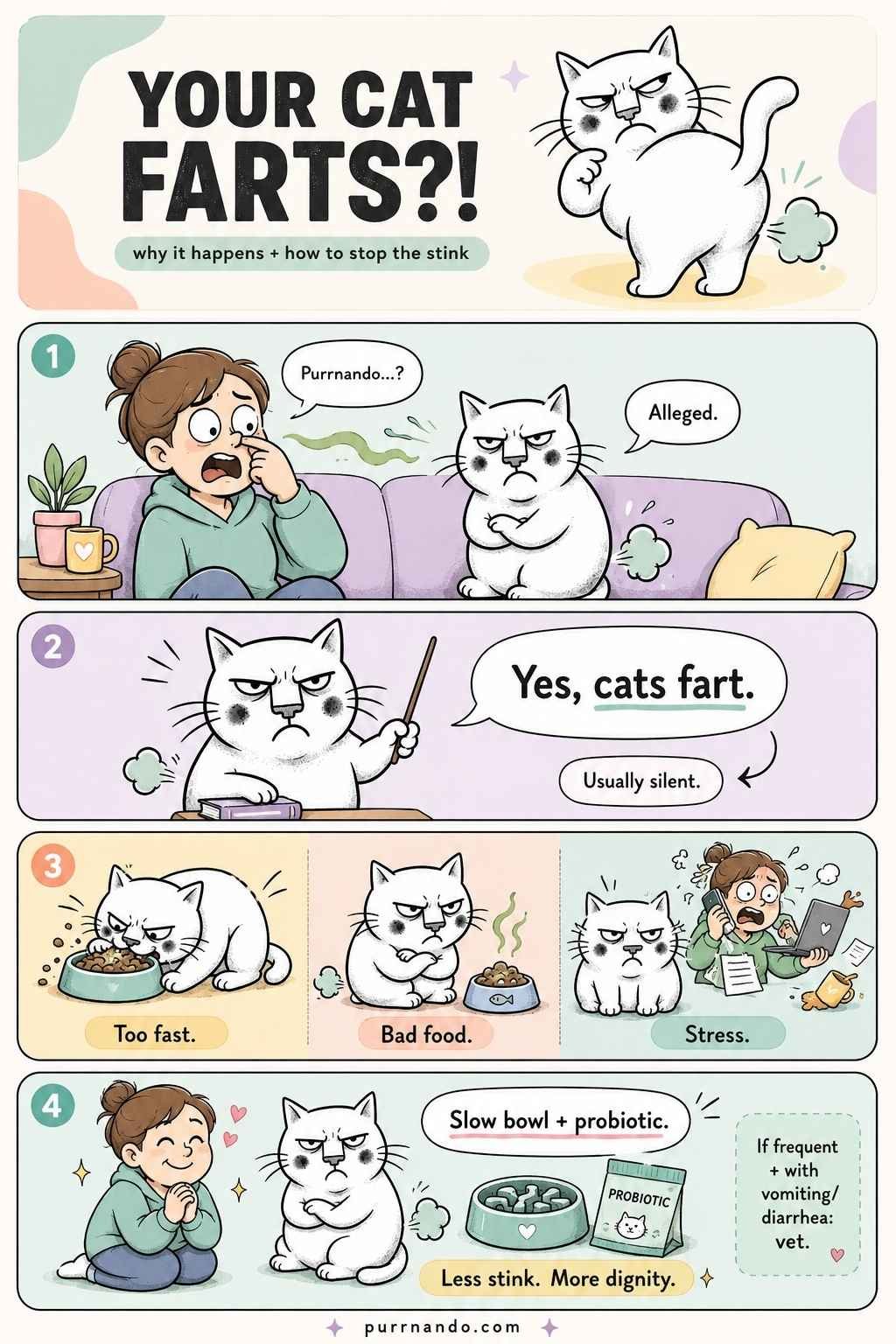
But don’t you dare get smug about this. You hoomans fart roughly 21 times a day, which is frankly OBSCENE. We do it once or twice. Discreetly. Silently. We were going to take this secret to our graves and you ruined everything.
Now sit down. I will explain it all. Not because I want to. But because someone has to, and the internet can’t be trusted.
Yes, Cats Fart — Here Is the Embarrassing Science
Let me get the facts out of the way so we can move on and pretend this never happened.
Every living mammal with a gastrointestinal system and an anus — which, I’m told, includes all of you — produces gas as part of the digestive process. That gas has to go somewhere. For most of you hoomans, it goes EVERYWHERE and at FULL VOLUME. For us cats, it is much more refined.
Gas builds up in the digestive tract in two ways: swallowed air (which gets in when we eat) and gas produced by bacteria in the gut breaking down food. Over 99% of that gas is actually odorless. Less than 1% accounts for the smell. The smell, of course, is what you’re all obsessed with. Typical.
A healthy cat farts once or twice a day. Usually silent. Often undetected. I, personally, have been doing it for years while sitting regally in your lap and you had NO IDEA. That’s called class, hooman. Look it up.
Veterinarians confirm this. As one vet from Daily Paws put it, sharing a small apartment with a cat does not mean signing up for a lifetime of a stinky, flatulent roommate. She still said “absolutely” when asked if cats fart, but she said it nicely, which is more than I’m doing.
Why Do Cats Fart? (The Causes, Ranked by How Embarrassing They Are)
1. Swallowing Air While Eating (The Dogs’ Fault, Basically)
When we eat too fast, we gulp air along with our food. That air goes into the digestive tract and must come out. Dogs do this constantly because dogs are chaos creatures with no self-respect. We cats typically eat with more poise.
EXCEPT. Except when you put two cats near the same food bowl and suddenly we forget we are dignified and we EAT LIKE IT IS A COMPETITION. If you have multiple cats, this is probably you causing the problem. As usual.
Product Suggestion for the Chaos You Created:
Y YHY Ceramic Slow Feeder Cat Bowl — This elevated, tilted ceramic bowl with a built-in maze forces cats to slow down and eat properly, like the aristocrats we are. It reduces air swallowing, prevents bloating, and keeps the dining experience civilized. Also, it is ceramic. CERAMIC. Not a sad plastic dish. We deserve this.
2. Diet Problems (This Is Also Your Fault)
Cats are obligate carnivores. This is not a lifestyle choice. This is biology. Our digestive systems are built to process meat — high-quality protein, appropriate fats, minimal carbohydrates.
When you feed us foods packed with:
- Soy and legumes (peas, lentils, chickpeas)
- Excessive fiber
- Artificial additives and fillers
- Dairy products (we are LACTOSE INTOLERANT and you KEEP OFFERING US MILK)
- Grains and corn
…you are basically asking our guts to do something they were never designed to do. The result? Gas. Lots of it. You did this to us.
Sudden food changes are another major culprit. Vets recommend transitioning your cat to new food over 10 to 14 days, not dumping a new bag in the bowl on Tuesday and acting surprised when Thursday is aromatic.
3. Gut Bacteria Imbalance (Invisible, But Real)
Deep inside our majestic digestive tracts live billions of microorganisms. When that balance of gut bacteria gets disrupted — by stress, antibiotics, dietary changes, or just the chaos of living with you people — fermentation in the intestines increases and more gas is produced.
This is where probiotics come in. I hate to recommend something hooman-adjacent, but I am a cat of science first.
Product Suggestion (I Tested This. I Won’t Confirm How.):
Purina Pro Plan FortiFlora Daily Probiotics for Cats — Veterinarian-formulated probiotic packets that support healthy gut microflora. You sprinkle it on the food. Cats love the taste (infuriating — we’re supposed to be suspicious of things that are good for us). Works particularly well during diet transitions or digestive upset. Thousands of reviews confirm it reduces gas and digestive issues.
4. Eating Too Quickly
As mentioned. A cat who inhales food like it’s being taken away will inhale a lot of air along with it. Aerophagia, scientists call it. I call it Embarrassing Behavior That I Would Never Engage In If My Sister Wasn’t Always Trying to Steal My Bowl.
The solution is a slow feeder bowl (see above) or feeding smaller, more frequent meals throughout the day. Your vet can advise on portions.
5. Stress and Anxiety
Yes, we fart when stressed. This is PRIVATE INFORMATION that I am sharing under protest.
Stress and anxiety affect the gut biome, immune function, eating habits, and digestion. A stressed cat is a gassy cat. So if you’ve been rearranging furniture, bringing new pets home, making loud noises, or simply EXISTING in a way that disrupts my schedule, congratulations. You’ve weaponized my digestive tract against both of us.
6. Food Allergies and Intolerances
Cats can develop food allergies at any point in their lives, even to foods they’ve been eating for years. The most common culprits are chicken, eggs, dairy, beef, and fish. Symptoms include not just gas but skin irritation, vomiting, and diarrhea.
If your cat’s gas is frequent or foul-smelling, a food allergy could be the cause. A hypoallergenic or limited-ingredient diet, confirmed with your veterinarian, may help significantly.
7. Intestinal Parasites
Worms. Roundworms. Hookworms. The kind of thing that happens to cats who go outside unsupervised, or to kittens. Parasites cause inflammation in the digestive tract, which causes abnormal gas buildup.
I don’t have this problem because I am an indoor cat of impeccable hygiene and refined sensibilities. But if you have a kitten or an outdoor cat who seems unusually gassy, a vet check for parasites is worth it. This is not the time to Google home remedies.
8. Gastrointestinal Disorders
Sometimes the gas is a sign of something more serious — inflammatory bowel disease, malabsorption conditions, bacterial overgrowth, or other GI disorders. If the gas comes with weight loss, vomiting, diarrhea, blood in the stool, loss of appetite, or obvious abdominal discomfort, please take your cat to the vet immediately. This is the part of the article where I stop being funny because your cat needs help.
What Does Normal Cat Gas Look Like? (Silent, Rare, Elegant)
Normal cat flatulence is:
- Silent (we have standards)
- Infrequent (once or twice a day at most)
- Mostly odorless
- Not accompanied by other symptoms
That’s it. You may never even notice it. In fact, the best kind of cat gas is the kind that drifts imperceptibly past your nose while you’re on a video call and you can never prove anything.
Cat gas becomes a concern when it is:
- Frequent (multiple times per day, every day)
- Particularly foul-smelling
- Accompanied by bloating, vomiting, diarrhea, weight loss, or loss of appetite
- Sudden and severe in onset
If any of those apply, do not consult a blog written by a grumpy cat. Consult a veterinarian.
Kittens vs. Senior Cats: Who Farts More?
Kittens have immature digestive systems and immune systems, which makes them more prone to gas. Senior cats have weaker systems as they age, which has the same effect. Adult cats in their prime — like myself — are at peak digestive efficiency.
I’m telling you this so you understand the gas is not MY fault. It is the fault of whichever life stage I am currently in.
The “But Why Does It Smell So Bad?” Section
(You asked. I regret that you asked.)
The smell in flatulence comes from sulfur-containing gases produced when gut bacteria break down certain foods. High-protein diets — which we should absolutely be eating, because meat — can produce stronger-smelling gas. That’s normal and fine.
What is NOT fine is persistent, room-clearing, makes-you-question-your-life-choices odor. That level of smell often indicates a gut microbiome imbalance, food intolerance, or digestive disorder. Something is off, and you should investigate it.
For everyday ambient cat-ownership odor management, I reluctantly point you to this:
Product Suggestion (For Your Inferior Hooman Nose):
LEVOIT Air Purifier with HEPA Filter for Pet Owners — A top-rated air purifier that captures pet odors, dander, hair, and other particulates. Quiet enough that it won’t disturb my naps. Effective enough that I can maintain plausible deniability. If you’re going to live with a cat — with all that entails — investing in air quality is simply sensible.
Can I Blame Cat Farts on Other Things?
Asking for a hooman I know.
Technically, yes. Cat farts are odorless most of the time and entirely silent. This creates what scientists call a “forensic gap” and what I call a golden opportunity. If you are in a meeting and something happens, look pointedly at the cat. We accept this arrangement. We have been taking the blame for things since 3000 BC and we manage.
Bonus Product (For the Hoomans Who Deserve This):
I Fart To Make You Smell Better Funny Cat T-Shirt — Yes. This is a real shirt. A wearable confession. A cotton-based crime scene. It proudly announces, “I fart to make you smell better,” which is exactly the kind of logic a cat would use if cats paid taxes and owned novelty clothing. Give it to the person in your life who laughs at cat butts, blames the pet, and somehow still deserves love.
How to Reduce Your Cat’s Gas: A Summary for Hoomans with Short Attention Spans
- Feed high-quality food — high-protein, low-carb, no legumes, no soy, no dairy. Read ingredient labels. If the first three ingredients are corn and mystery filler, that is not food.
- Transition food gradually — over 10 to 14 days, mixing old and new food in increasing ratios. Do not just swap the bag out. We are not equipment.
- Use a slow feeder bowl — if your cat eats like it is a competition. This reduces air swallowing and improves digestion.
- Add a probiotic — especially during food transitions, illness recovery, or if gas is a recurring issue. Vet-recommended options like FortiFlora make this easy.
- Keep stress low — stable routines, safe hiding spaces, and not rearranging the furniture every three months would be appreciated.
- Rule out parasites — routine vet visits, especially for kittens and outdoor cats.
- See a vet if gas is excessive — do not wait for it to become a lifestyle. Persistent or severe gas with other symptoms warrants professional evaluation.
When to Call the Vet: Non-Negotiable Signs
Call your vet if your cat’s gas is accompanied by:
- Vomiting
- Diarrhea or bloody stool
- Loss of appetite
- Sudden weight loss
- Visible bloating or abdominal pain
- Lethargy or general decline
These are not “wait and see” situations. These are “call immediately” situations.
A Final Word from Purrnando
You came here because you suspected something. You were right. Cats fart. We have always farted. We will continue to fart in total silence while staring at you with an expression of profound judgment.
The difference between us and dogs is that we have NEVER let it become a personality trait. We don’t announce it. We don’t look proud. We don’t wag anything afterward. We simply continue reclining in our sunbeams, and we maintain eye contact, and you will never be entirely sure.
That is called dignity, hooman. It cannot be purchased on Amazon.
The probiotic supplements can be, though. Get those. Your cat will thank you in the only way we know how — by not smelling terrible in your vicinity.
Now please close this tab. You’ve learned enough for one day.
— Purrnando
Disclaimer: Purrnando is a grumpy fictional cat, not a veterinarian. For actual medical concerns about your cat’s digestive health, please consult a licensed veterinarian. That is genuine advice, delivered without sarcasm.
This post contains affiliate links. A portion of every sale goes toward funding Purrnando’s lifestyle, which he insists is a tax-deductible necessity.