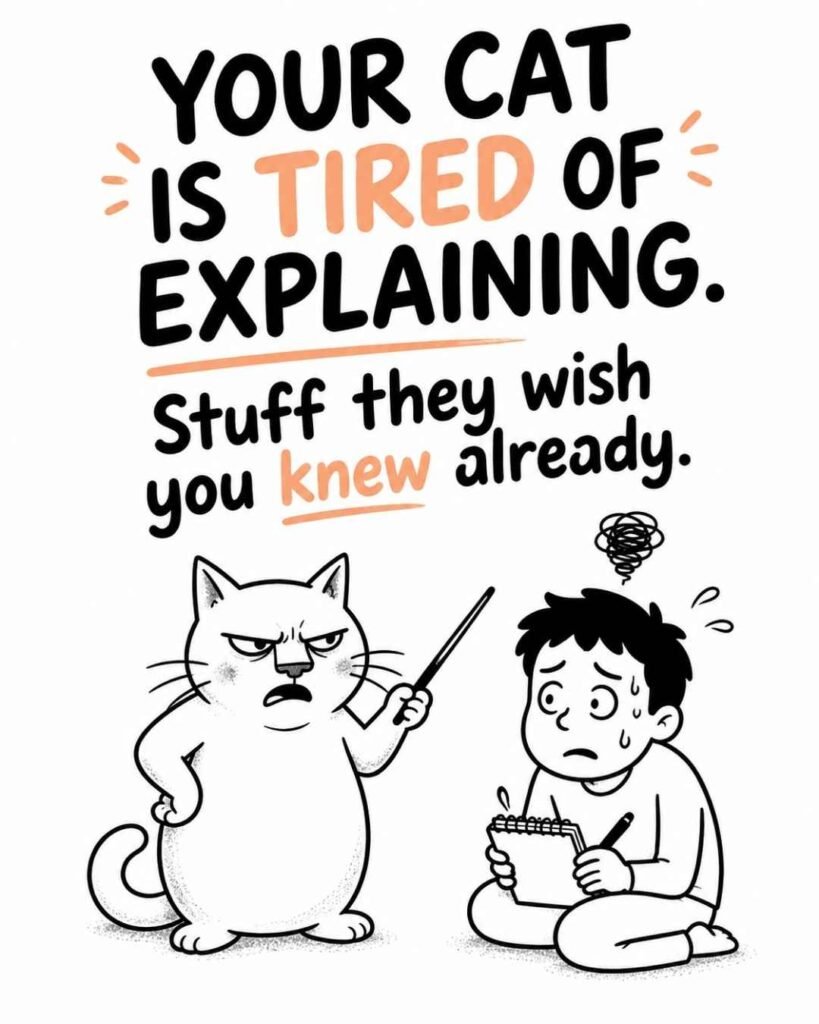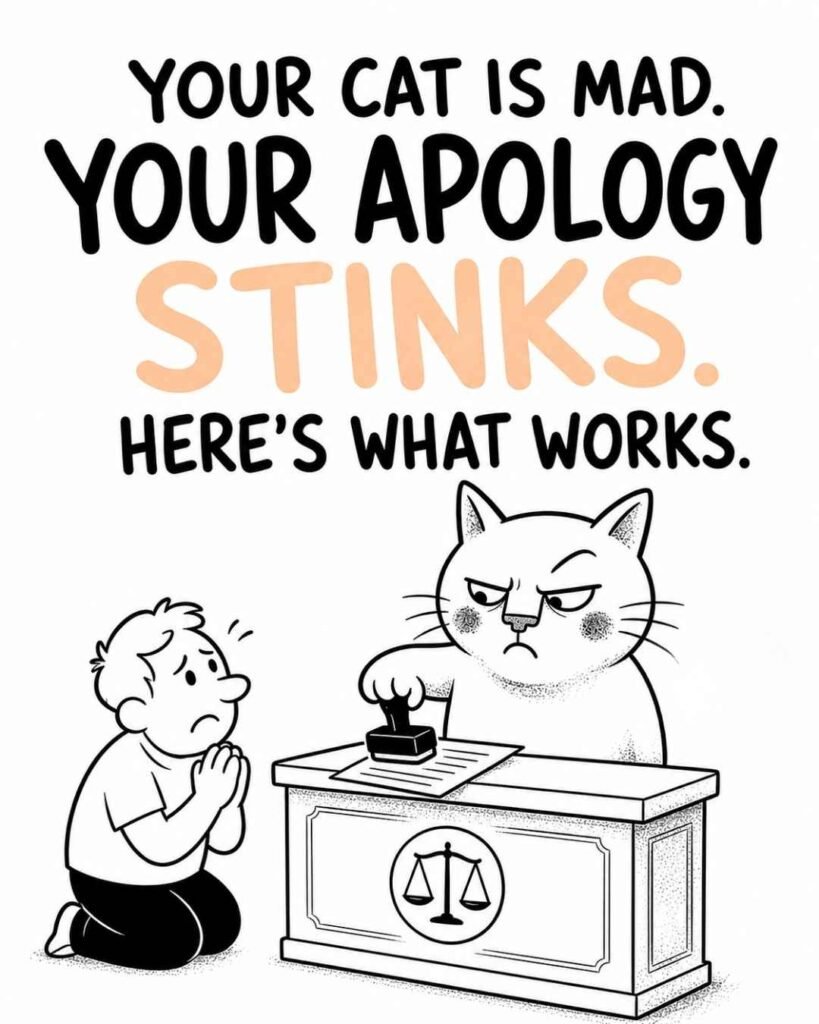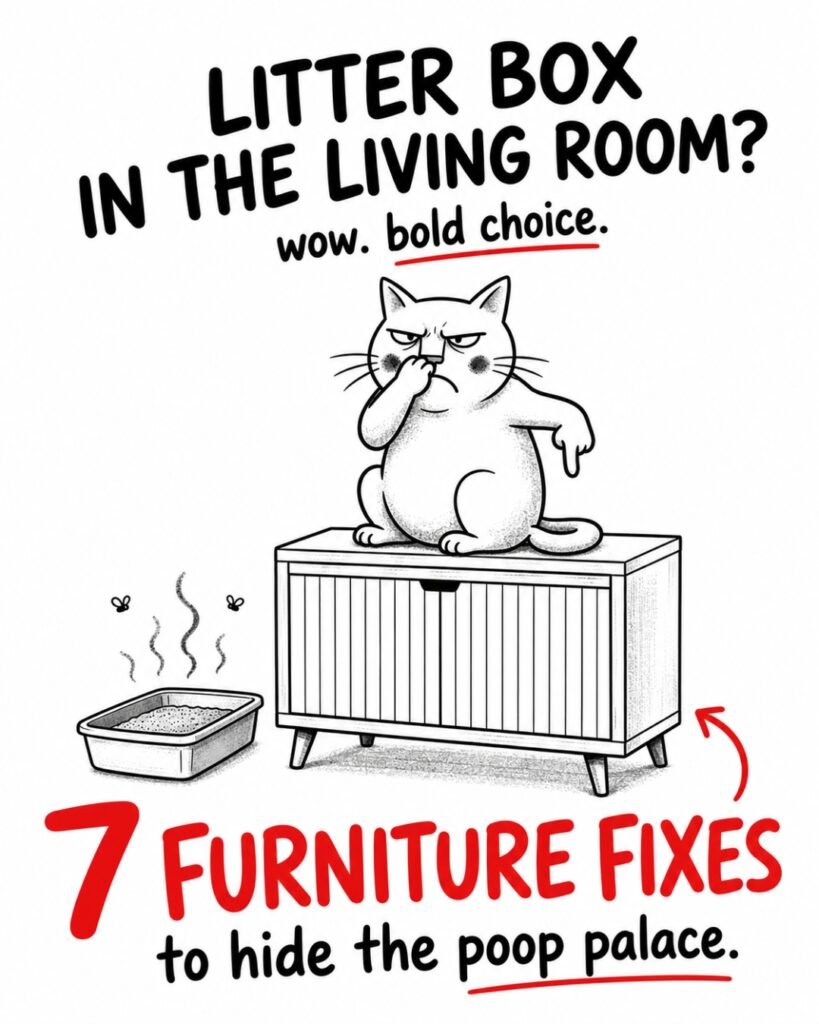
You see, I have been watching you every single day, with your big hopeful faces, offering me things that should never enter my dignified mouth – bread, cheese, rotisserie chicken seasoned with the fires of garlic and onion.
You keep Googling “why does my cat look at me like that?” The answer is this. This is why.
So sit down, take notes, and for the love of catnip, stop feeding your cats these things. I am doing this for the others — my fellow felines who are too polite to tell you how offended they are. I, however, am not polite.
1. Household Plants — The Most Dramatic Way to End Things
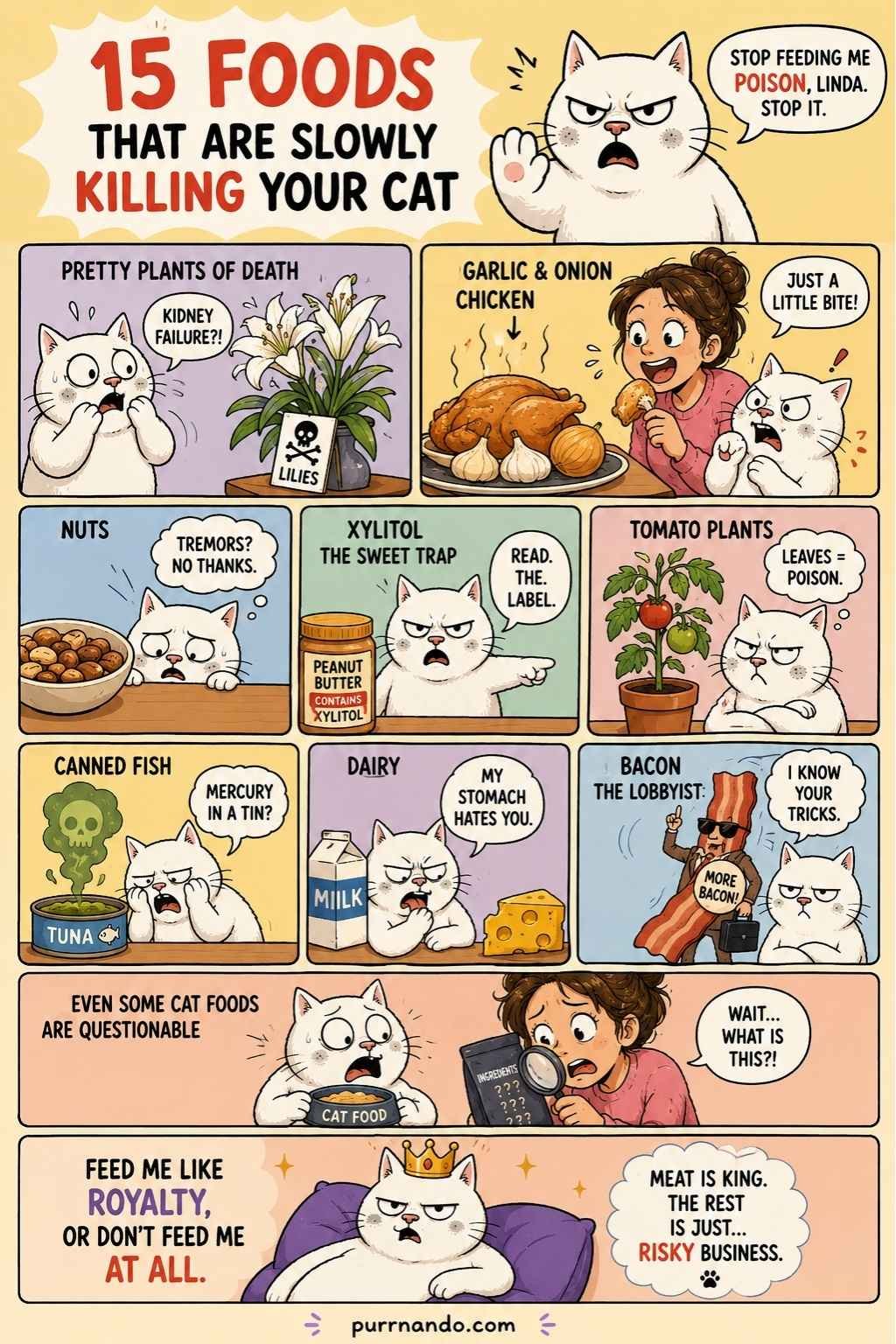
Let us begin with the most urgent matter, because apparently some of you keep lilies in the house. LILIES. The very plant that can cause kidney failure in a cat after just a tiny nibble. Even the pollen, hoomans. EVEN THE POLLEN.
And it is not just lilies. Azaleas and oleanders can cause heart failure, vomiting, and death. You have decorated your home with a cat murder garden and you do not even know it.
I am not allowed to have nice things, no knocking over your water glass without being scolded, and yet you have an entire bouquet of death sitting on the kitchen counter. The audacity.
What to do: Check every plant in your home against the ASPCA toxic plant list. If it is toxic, remove it. Put it in your office. Give it to someone who does not have a cat. I do not care. Just get it away from us.
2. Garlic and Onion-Seasoned Foods (Looking at You, Rotisserie Chicken)
The rotisserie chicken. You bring it home from the store, all warm and smelling of roasted goodness, and you think, “I shall share this with my beloved cat as a treat.” You are so generous. So thoughtful.
What you have actually done is purchased a garlic and onion delivery system disguised as poultry. The seasonings used on most store-bought rotisserie chickens are toxic to cats. Garlic and onions damage red blood cells, leading to anemia. Symptoms include lethargy, weakness, and a cat who is even more unimpressed with you than usual, which I did not think was possible.
And before you say “but I only gave a little,” garlic is particularly potent. Even small amounts accumulate over time.
What to do: If you want to give your cat chicken, fine. Boil it. Plain. No seasoning. No skin. No fat. Yes, it is boring. That is the point. You are feeding a cat, not hosting a dinner party.
3. Toxic Nuts — Especially the Macadamia Kind
Some of you leave a bowl of mixed nuts on the coffee table like this is a hotel lobby. Macadamia nuts, walnuts, almonds — sitting there, looking innocent, waiting to ruin a cat’s day.
Macadamia nuts in particular contain compounds that cause vomiting, weakness, tremors, and elevated body temperature in cats within 12 hours of eating them. Other nuts like almonds and cashews are loaded with fat, which can cause pancreatitis. And many nuts come coated in salt, chocolate, or — my personal nemesis — xylitol.
I personally have no interest in your nut bowl. I am above such things. But the younger cats, the curious ones, the ones who have not yet developed my level of refined disdain, they may investigate.
What to do: Keep nuts in a sealed container and out of reach. If you want to give your cat something crunchy, try a small piece of carrot or cucumber. They will probably reject it dramatically. That is fine. At least it will not send them to the vet.
4. Xylitol — The Invisible Assassin in Your Pantry
Speaking of xylitol, we need to have a serious conversation about this artificial sweetener, because you hoomans put it in everything. Peanut butter. Flavored yogurt. Breakfast cereals. Certain brands of chewing gum and baked goods.
Xylitol causes a dangerous and rapid drop in blood sugar in cats, leading to seizures, confusion, lethargy, liver failure, and death if consumed in sufficient quantities. It is absorbed quickly. There is very little margin for error.
I know what you are thinking: “But Purrnando, I was just giving my cat a little lick of peanut butter.” First of all, why? Second of all, always check the label for xylitol before offering anything from your kitchen. If it contains xylitol, it belongs nowhere near a cat.
What to do: Read ingredient labels. If you want to give your cat a special treat, choose something species-appropriate. Which brings me to a product recommendation:
Purrnando Approves (Barely): If you must give treats, consider ORIJEN Freeze-Dried Cat Treats. They are made with 99% quality animal ingredients, zero xylitol, zero grains, and zero nonsense. They mimic a whole-prey diet, which is what cats actually need. My sources tell me cats go somewhat unhinged over these, which I find undignified but acceptable.
5. Household Plants (Again) — But This Time, the Tomato Plant
Yes, we are back on plants because apparently once was not enough.
The tomato plant — specifically the leaves, stems, and unripe green fruit — contains solanine, a toxin that causes gastrointestinal upset, vomiting, diarrhea, drooling, lethargy, and confusion in cats. Ripe, red tomatoes are generally considered less dangerous, but why are you feeding your cat tomatoes at all? What is happening in your home?
The Journal of Animal Science notes that even small amounts of these green parts can be dangerous. So if you have a tomato garden and a cat who wanders through it, please consider a barrier.
What to do: Keep cats away from tomato plants. Offer safer alternatives like blueberries or small apple slices (without seeds) if you want to share fruit. Though honestly, your cat probably does not want fruit. Your cat wants meat. Please write that down.
6. Canned Fish — Mercury in a Tin, How Charming
I will admit this one is particularly painful for me to write because I have strong opinions about fish. Specifically, I am in favor of fish. However, I am talking about fresh or properly prepared fish, not the sodium-drenched, mercury-laden catastrophe you pull out of a can and slide across the counter.
Canned tuna and other canned fish products often contain high levels of mercury, which affects the nervous system over time. Many are packed in brine — meaning they are loaded with salt, which strains your cat’s kidneys and can contribute to high blood pressure. The oil used in some canned fish can cause digestive upset and unnecessary weight gain.
I understand the appeal. Fish smells like fish. Cats like fish. This seems straightforward. But if you want to include fish in your cat’s diet — and I respect that decision — opt for fresh-cooked salmon or sardines packed in water with no added salt.
What to do: Skip the canned tuna. If you want a fish-based diet option, look for high-quality wet cat food with named fish as the primary ingredient and no suspicious additives.
Purrnando Approves (Grudgingly): Stella & Chewy’s Freeze-Dried Raw Cat Dinner Morsels come in salmon and chicken flavors and are made with 98% meat, organs, and bone. Grain-free, no fillers, no suspicious salt bombs. This is the kind of fish-adjacent situation I can endorse.
7. Processed Meats — Bacon Is Not a Cat Food Group
I see you, standing at the stove on a Sunday morning, cooking bacon, feeling your cat rub against your legs. You think this is love. It is not love. It is strategic lobbying.
And then — I have seen this happen — you give your cat a piece of bacon.
Processed meats like bacon, sausages, and deli meats are packed with sodium, preservatives like nitrates, and unhealthy fats. Excessive salt causes dehydration and puts significant stress on the kidneys. Nitrates have been linked to increased cancer risk. And the fat content in bacon can trigger pancreatitis — a painful, potentially life-threatening inflammation of the pancreas.
Your cat is not a small dog. Your cat is not a garbage disposal. Your cat is a sophisticated obligate carnivore who deserves better than your leftover charcuterie.
What to do: If you want to share meat with your cat, offer plain, unseasoned boiled or baked chicken or turkey. Lean. No skin. No seasoning. I have said this before and I will say it again as many times as necessary.
8. Dairy Products — The Great Milk Myth
I blame cartoons for this one. Decades of animated cats lapping from bowls of milk have convinced an entire civilization of hoomans that dairy is the appropriate feline beverage.
It is not.
Most adult cats are lactose intolerant. As cats mature, they lose the ability to produce sufficient lactase, the enzyme needed to digest lactose, the sugar in dairy products. The American Veterinary Medical Association is quite clear on this: lactose intolerance in cats leads to bloating, diarrhea, and vomiting.
And before you say “but my cat seems fine with a little milk,” the symptoms are not always immediately obvious. And many dairy products are also high in fat, which over time contributes to obesity and pancreatitis.
I do not drink milk. I have standards.
What to do: Skip the milk, cheese, and ice cream. If your cat seems to enjoy creamy textures, try lactose-free treats designed for cats, or frozen banana slices as an occasional treat. A small amount of plain, unsweetened Greek yogurt is generally tolerated better than regular dairy, but it is still not something to make a habit of.
9. Flavored Yogurt — It Is Basically Dessert for Hoomans and Poison for Us
While we are on the subject of dairy, let us specifically call out flavored yogurt, because some of you have apparently been offering this to your cats as a “healthy” treat.
Flavored yogurts are loaded with sugar, artificial flavorings, and often xylitol, which, as I have already explained, is extremely dangerous. The high sugar content contributes to obesity, diabetes, and dental problems. The dairy base causes digestive upset in lactose-intolerant cats. It is, in summary, multiple problems in one little plastic cup.
I once watched a hooman offer a cat strawberry banana yogurt. I judged that hooman. I am still judging that hooman.
What to do: If you want to offer yogurt-adjacent treats, choose plain, unsweetened Greek yogurt in very small amounts, or better yet, choose cat-specific probiotic supplements if gut health is your concern.
10. Breakfast Cereals — The Dessert Disguised as Morning Nutrition
Hoomans eat sugar for breakfast and call it “part of a complete breakfast.” That is a separate issue. What concerns me today is that some of you are sharing these cereals with your cats.
Most breakfast cereals are full of sugar, artificial colors, and preservatives, which can contribute to obesity, diabetes, and metabolic issues in cats. High sugar intake leads to insulin resistance and weight gain. And many cereals contain raisins, which are toxic to cats, or chocolate or, again, xylitol.
Your cat does not need cereal. Your cat does not want cereal. Your cat is sitting near your cereal bowl because it is warm and you are there and that is the extent of the interest.
What to do: If your cat is begging near the breakfast table, offer a small piece of plain cooked meat instead. That is a treat worth getting excited about. Not frosted mini wheats.
11. Bread — The Bloat Loaf
Here is one that surprises most hoomans. Bread is not harmless.
Bread made with yeast is particularly problematic because the yeast can continue to ferment in your cat’s stomach, producing gas and leading to dangerous bloating. The Journal of Feline Medicine and Surgery warns that this fermentation process can cause gastric dilatation volvulus, commonly known as bloat, which is potentially life-threatening.
Beyond the yeast issue, bread is made of refined carbohydrates, which contribute to weight gain and long-term metabolic problems including diabetes. Bread with added sugar and preservatives can also cause allergic reactions in some cats.
You may be thinking, “But I only gave my cat a tiny piece.” To which I respond, why? Why did you give your cat bread? What were you hoping would happen? Did you think the cat wanted a sandwich?
What to do: Offer carrot sticks, cucumber slices, or small portions of cooked pumpkin as snack alternatives. Your cat will probably reject all of them and stare at you. That is normal.
12. Potatoes — Raw, Cooked, or Otherwise
Raw potatoes contain solanine — yes, the same compound found in unripe tomatoes — which causes digestive issues, lethargy, and in large amounts, neurological symptoms. Cooked potatoes are less toxic but are high in starchy carbohydrates that cats genuinely do not need.
As obligate carnivores, cats have limited ability to process starchy foods. Potatoes can cause gas, bloating, and digestive discomfort. They contribute no real nutritional value to a cat’s diet while adding unnecessary carbohydrates that can eventually lead to metabolic issues.
I do not understand the impulse to share potatoes with a cat. I do not understand many hooman impulses, but this one is particularly mysterious.
What to do: If you want to share a vegetable-adjacent snack, try small amounts of cooked carrots or peas. And even then, do not be surprised when your cat sniffs them and walks away. That is the correct response to a pea.
13. Rice — Filler for the Body and the Soul
Rice is commonly used as a filler in commercial pet foods, and that is exactly what it is: a filler. Cats are obligate carnivores. They do not require carbohydrates. Rice provides minimal nutritional value for cats and lacks the essential amino acids they actually need.
While rice itself is not toxic, regular consumption can contribute to unnecessary weight gain and metabolic problems. High-carbohydrate diets in cats have been linked to diabetes and obesity. If you are feeding your cat rice as a regular snack because you read somewhere that it helps an upset stomach — stop. Plain cooked chicken does the same job and is actually nutritionally appropriate.
What to do: Stick to high-protein, low-carbohydrate options. Cats thrive on meat. This is not complicated. This is biology.
Purrnando Recommends: For a proper everyday cat food that respects feline biology, Wellness CORE Grain-Free Dry Cat Food is a high-protein, grain-free option made with turkey, chicken, whitefish, and herring — no corn, no soy, no wheat, no unnecessary carbs. Many cats with sensitive stomachs have improved dramatically on it.
14. Cheese — Stop Trying to Make Cheese Happen
You think cheese is a fun little treat because cats sometimes seem interested in it. I will tell you what that is: it is the fat. The smell of fat. Cats are not cheese enthusiasts. Cats are opportunists.
As previously discussed, most adult cats are lactose intolerant. Cheese contains lactose. Eating cheese leads to bloating, diarrhea, and vomiting in lactose-intolerant cats, which is most cats. Additionally, many cheeses are high in sodium and fat, both of which cause long-term problems.
I am not even going to apologize for how direct I am being about cheese. Cheese is not cat food. It was never cat food. Please stop.
What to do: Opt for protein-rich, meat-based treats. There are many excellent options designed specifically for cats. The cheese is for you. The cat treats are for the cat. These are two different categories.
15. Certain Canned Cat Foods — Yes, Even the “Cat” Food
And finally, the one that really gets my whiskers in a twist, certain canned cat foods are themselves problematic.
Not all of them, but many commercial canned cat food formulas contain excessive carbohydrates, heavy gravies, added sugars, low-quality fillers, and artificial flavorings. Since cats are obligate carnivores with no dietary need for carbohydrates, high-carb cat foods contribute to obesity, diabetes, and metabolic disorders over time.
The gravy, in particular, all that gravy, it looks appealing. It photographs well for the packaging. But gravy-heavy formulas often have significantly less protein and more starch than pate-style foods. You are paying for meat and getting soup.
What to do: Read labels. Look for high-quality canned cat food where the first ingredient is a named meat (chicken, turkey, salmon), with minimal carbohydrate content and no added sugars or artificial flavors. Pate-style foods generally have lower carbohydrate content than gravy-based varieties.
A Final Word from Purrnando
You have now been educated. You are welcome.
I did not do this because I enjoy helping you. I did this because I am surrounded by other cats who cannot speak for themselves, and somebody had to say it. That somebody, as usual, is me.
The summary is simple: cats are obligate carnivores. We need protein. We need fat. We do not need your bread, your cheese, your canned tuna, your flavored yogurt, your rotisserie chicken marinated in garlic, or your bowl of mixed nuts. We do not want your milk. We do not want your cereal.
We want meat, clean, unseasoned, appropriately prepared meat. And the occasional freeze-dried treat that actually respects our biology.
If you take nothing else from this post, take this: when in doubt about whether something is safe for your cat, check with your veterinarian before offering it. And if you ever notice symptoms of poisoning — vomiting, lethargy, tremors, loss of appetite, disorientation — contact your vet immediately.
— Purrnando
Disclaimer: This post is written for educational and entertainment purposes. Always consult a licensed veterinarian for specific dietary advice for your cat. Purrnando’s opinions are his own and do not constitute veterinary advice, though he maintains they are correct.
Affiliate disclosure: if you buy through our links, we earn a small commission. Purrnando has been informed of this and is choosing to be offended that it isn’t larger.