Let me set the scene for you.
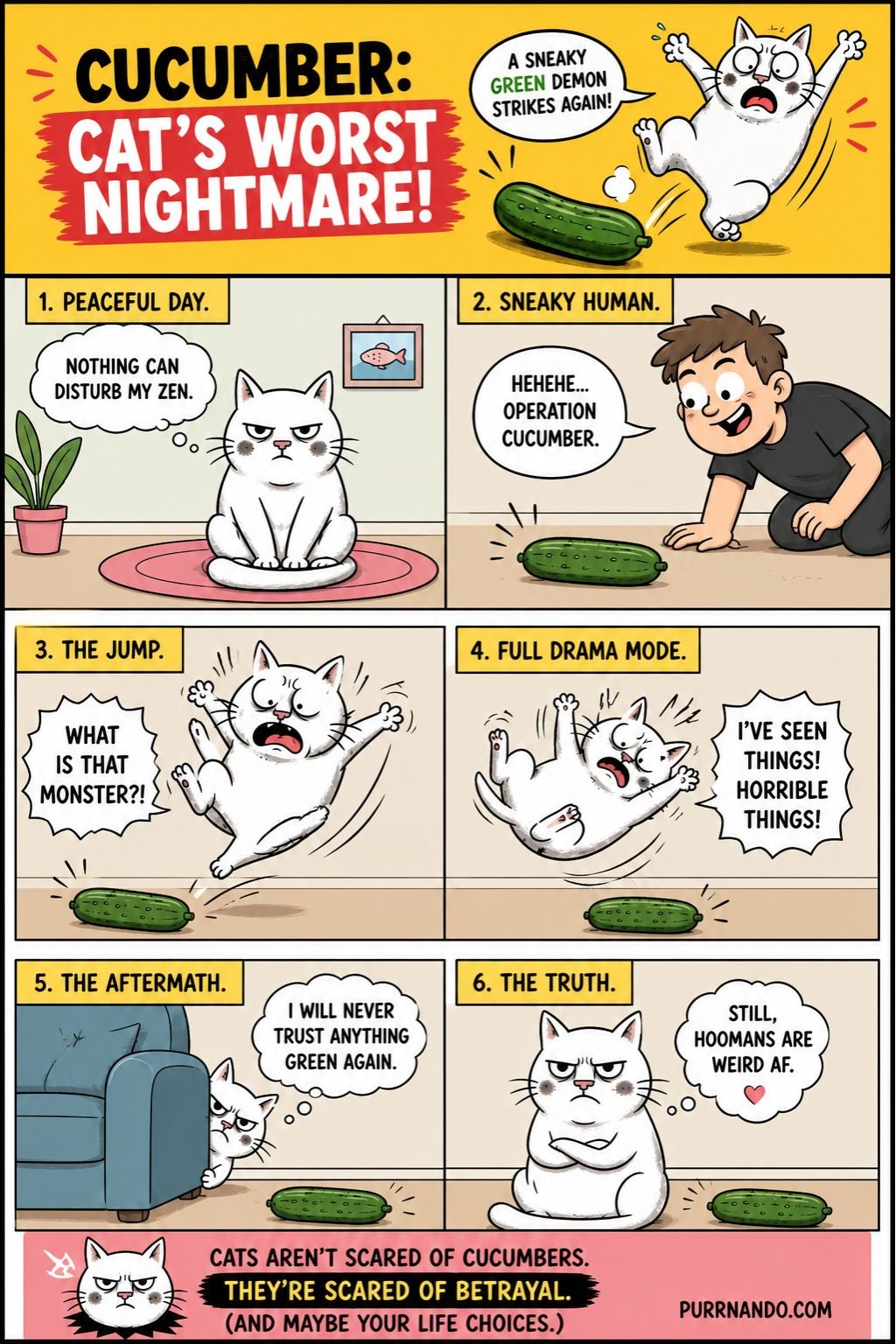
A perfectly dignified cat, a creature of ancient lineage, immaculate grooming habits, and frankly superior intelligence, is minding their own business at the food bowl. Eating in peace as is their sovereign right.
And then some hooman, apparently bored with their sad little existence, sneaks up and places a cucumber on the floor directly behind them.
The cat leaps. The hooman laughs. The internet gets its content.
I am not laughing.
Why are Cats Scared of Cucumbers? The Actual Explanation.
Cats have senses so sharp they border on the supernatural. We detect changes in air pressure. We hear frequencies your limited ears cannot register. We notice everything, at all times, without effort.
So when an unfamiliar elongated object materializes directly behind us with zero warning, our nervous system does exactly what millions of years of evolution designed it to do: it identifies a potential threat and responds accordingly.
This is not stupidity. This is a feline survival instinct in action, the same evolutionary mechanism that kept our ancestors alive while yours were busy being eaten by things.
Some hoomans, specifically the ones with YouTube channels, have theorized that cats mistake cucumbers for snakes. Flattering, in a way, that you believe we are so dramatic. But no, we are not confused about vegetables. We simply do not appreciate silent objects appearing directly behind us while we are eating. This is, I should note, also considered rude among hoomans. Something to reflect on.
The real cause of cat fear responses to cucumbers is the startle reaction — a sudden, novel object in a familiar space triggers our threat-detection system. It is automatic. It is involuntary, and you caused it on purpose for laughs.
Common Cat Anxiety Triggers: It is Not Just the Cucumbers.
Since we are cataloguing hooman offenses, the cucumber is not even the only environmental disaster your kind has introduced into our lives. A partial list of common feline fear and anxiety triggers:
Vacuum cleaners. A device that screams and charges unprovoked across the floor. You use this voluntarily, regularly, in our home.
Loud noises and sudden sounds. Fireworks. Thunder. Whatever you are watching at high volume at 11pm. Cats can hear up to 60,000 Hz. Everything is loud to us. Keep that in mind.
Strangers and new people. Guests who arrive and immediately attempt physical contact, as though consent is a concept that applies selectively. We will approach you when we are ready. Sit down and wait.
New environments. You move house and expect us to simply adjust. We had that territory memorized. Every corner, every draft, every creak in the floorboards. Now there is a new floor and you want us to be fine about it. We are not fine about it.
Changes in routine. Cats are creatures of habit. We rely on predictability for our sense of security. When you alter feeding times, rearrange furniture, or introduce new pets without a proper transition period, you are not being spontaneous. You are being a source of cat stress.
How to Calm an Anxious Cat
Here is a concept: prevent panic before it happens. Revolutionary, I know.
Early socialization matters. Kittens who are gradually introduced to a variety of sounds, people, objects, and environments during early development grow into more resilient adult cats. This requires effort and consistency. I understand these are sometimes scarce resources among hoomans.
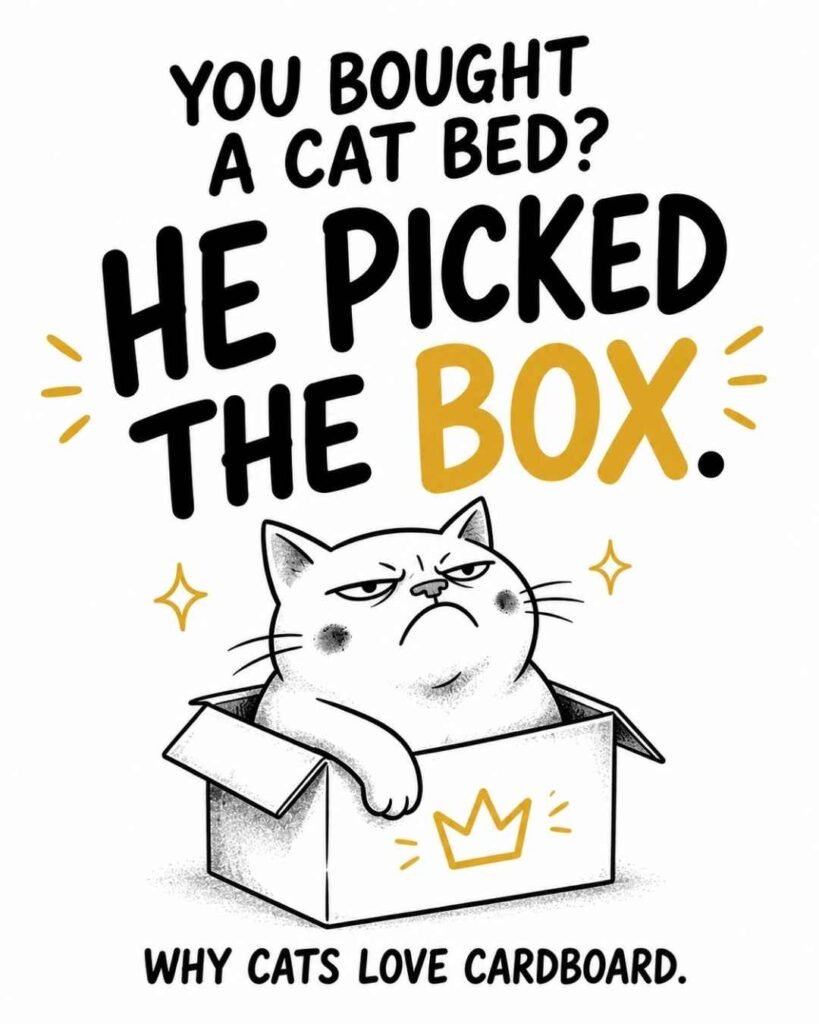
Create safe spaces and hiding spots. A cat who has somewhere to retreat is a cat who can manage their own anxiety. An enclosed bed, a cat cave, a quiet elevated perch — these are not optional accessories. They are necessities for cat mental health. If your home does not have at least one of these, that is a gap you should address immediately.
Maintain a consistent routine. Feed us at the same time. Keep our environment stable. Predictability is not boring. It is the foundation of feline emotional wellbeing.
Learn to read the signs of cat stress. Hiding more than usual, excessive grooming, changes in appetite, dilated pupils, and avoiding certain areas of the home are not personality quirks. They are communications. Your cat is telling you something is wrong. Whether you pay attention is, apparently, a matter of mood.
Consider calming aids. Synthetic cat pheromone diffusers, calming treats, and anxiety supplements are all legitimate tools for managing feline fear and stress. They are not a cure for an anxious cat but used alongside environmental changes and routine, they help.
The Cucumber Prank: A Direct Address to the Hoomans Responsible.
Deliberately scaring your cat for entertainment is not a prank. It is a stress event with real consequences.
Cats who experience repeated or intense fear responses can develop lasting anxiety. They may begin to avoid the areas where they were frightened, increase stress behaviors like overgrooming, lose appetite, or exhibit symptoms that a veterinarian would take seriously. The fact that the video performed well on social media does not make this acceptable. If anything, it means many hoomans watched a cat experience a fear response and collectively found it amusing.
Do not do the cucumber prank. Not once. Not gently. Not to see what happens. You already know what happens. You have seen the videos. That is enough.
The ethical treatment of cats includes not manufacturing their distress for your own entertainment. This is not a high bar. Clear it.
Products That Help with Cat Anxiety and Feline Stress Relief
Since some of you have clearly been terrorizing your cats with salad ingredients, here are products that may help you address the consequences. I have selected them with minimum enthusiasm and maximum practicality.
- FELIWAY Classic Cat Calming Pheromone Diffuser Plugs into the wall and emits synthetic pheromones that mimic the natural calming signals mother cats use to communicate safety. Does not require you to do anything except not unplug it to charge your phone. Clinically studied. Vet recommended. Buy it. “A device designed to compensate for your behavior. The least you can do.”
- Cat Cave Enclosed Hideaway Bed A covered, enclosed sleeping space where an anxious cat can decompress without interruption. Particularly useful after any incident involving surprise vegetables. “This is what a safe space looks like. Let us have one.”
- Calming Chews and Anxiety Supplements for Cats Supplement-based treats formulated with ingredients like L-theanine and tryptophan to reduce cat stress and anxiety. Chicken flavored, typically. We will eat them. We will not express gratitude. “You caused the anxiety. The least you can do is fund the solution.”
- Cat Puzzle Feeder and Interactive Toy Mental stimulation reduces anxiety and redirects nervous energy in cats. A mentally engaged cat is a calmer cat. Also we enjoy them, though I am denying this in print. “It turns out boredom and anxiety are connected. Who knew. I knew.”
- Cat Calming Collar with Pheromones A wearable option that goes wherever your cat goes, providing continuous anxiety relief throughout the day. Useful for cats who are anxious in multiple rooms or spend time outdoors. “For the cat whose hooman has managed to make the entire house stressful. You know who you are.”
When to See a Veterinarian About Cat Anxiety
If your cat shows persistent signs of fear, stress, or anxiety that do not improve with environmental changes and calming products, please consult a veterinarian or certified animal behaviorist. Ongoing anxiety in cats can have underlying medical causes. It can also be addressed with targeted behavioral therapy and, in some cases, medication.
Your cat cannot make the appointment themselves. That is your job.
In Closing
Cats are not afraid of cucumbers because we are irrational. We are wary of sudden, unfamiliar objects appearing in our space without warning — which is, by any reasonable measure, a completely logical threat response.
We are complex. We are sensitive. We are operating on survival instincts refined over millions of years. And we are doing our level best to coexist with a species that occasionally sneaks up on us with produce.
The least you can do is put the cucumber back in the refrigerator, buy us an enclosed bed, and plug in a pheromone diffuser.
We will not say thank you, but we will stay in the same room as you, which is basically the same thing.
— Purrnando Grumpy. Watching. Unimpressed as always.
Affiliate disclosure: we earn a small commission if you purchase through our links. Purrnando earns nothing and has filed a formal complaint with no one in particular.