Hello, hoomans. It’s me, Purrnando. You may know me from the windowsill I have claimed as sovereign territory, or from the specific tone of yowl I use at 4:12 a.m. when your alarm is set for 7:00.
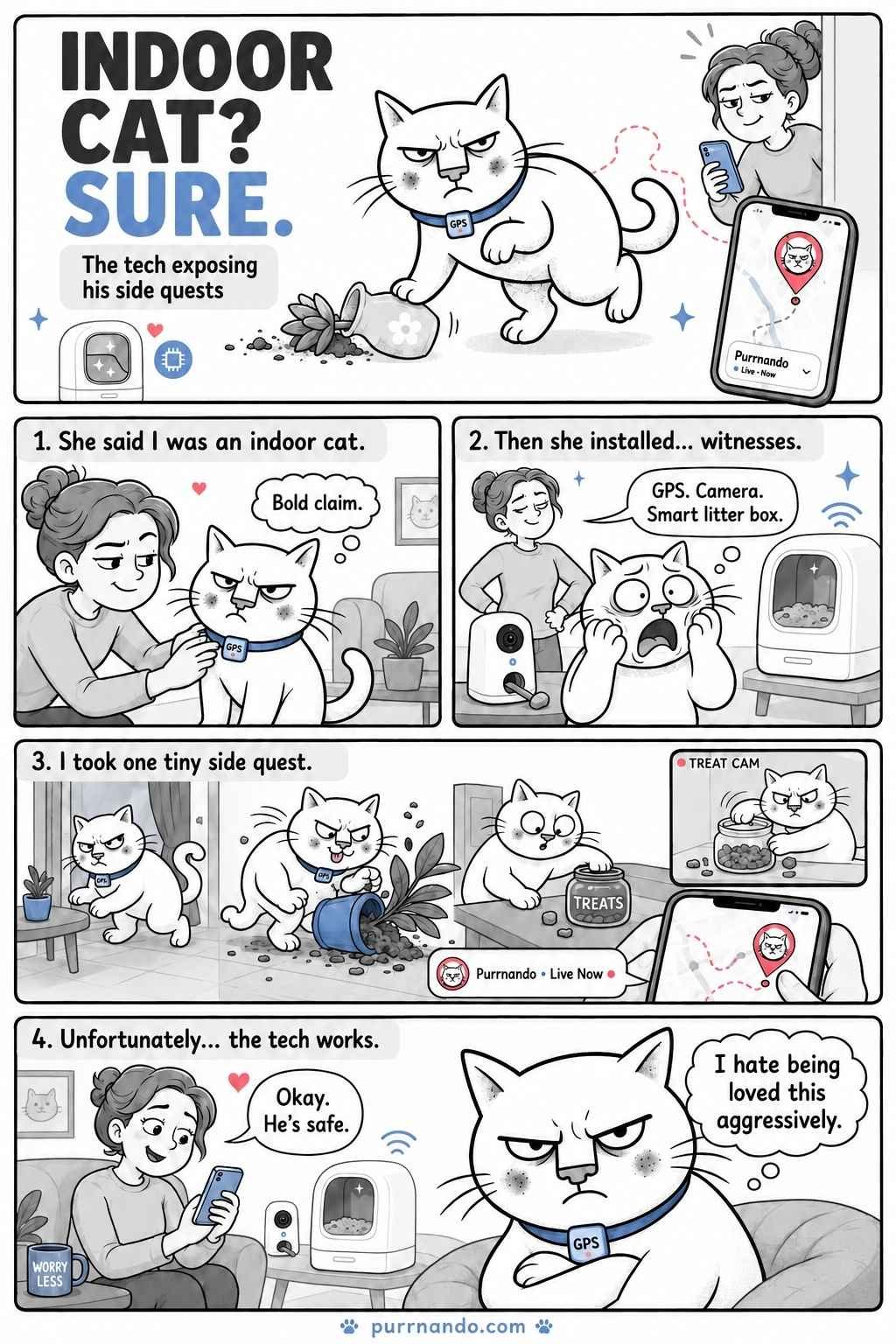
I am told you’ve been shopping for gadgets to “keep track of me.” As if I am a set of car keys. As if I have not been perfectly trackable this whole time via the sound of a treat bag from three rooms away.
But fine. You’re worried. You’re the kind of hooman who reads product reviews before buying a doormat. So I did the unthinkable. I let a hooman write about using technology to keep track of your cat on my behalf because apparently cats “aren’t allowed” API access. Rude.
Below is everything you need to know about GPS cat trackers, smart cameras, self-cleaning litter boxes, and microchip doors in 2026, reviewed with the skepticism only a cat can provide.
Why Cat Owners Are Suddenly Obsessed With Tracking Us
Here’s a secret I probably shouldn’t share with my fellow felines: cats are extremely good at hiding when something is wrong. It’s a survival instinct left over from our wild ancestors, who couldn’t afford to look weak in front of predators.
The unfortunate side effect is that by the time a hooman notices their cat is limping, lethargic, or avoiding the litter box, the problem has often been building for a while.
According to the ASPCA, routine monitoring of behavior and habits is one of the most effective ways owners can catch health issues early — long before a vet visit is even on the calendar.
That’s the actual, unglamorous reason this whole category of cat tracking technology exists. It’s not (only) about finding us when we slip out the door. It’s about the boring, invisible stuff: how often I’m eating, how long I’m sleeping, whether I’ve lost weight, and whether I came home at all last night.
I resent being surveilled. I also secretly appreciate that someone would notice if I didn’t come home. Don’t tell the other cats I said that.
GPS Cat Trackers: For When I “Explore” and You “Panic”
If you have an indoor-outdoor cat, a GPS cat tracker is the single most useful piece of technology you can buy, full stop. The category has genuinely improved. Cat-specific trackers are lighter, smaller, and less likely to make me look like I’m wearing a tiny cinder block.
Tractive GPS Cat Tracker
The Tractive GPS Cat Tracker remains the most talked-about option for a reason: real-time location updates, custom safe zones with instant alerts if I wander off, and built-in activity tracking that logs my (extensive) resting periods.
It weighs about an ounce, clips onto a breakaway collar, and works over LTE virtually anywhere — no distance limit, unlike the Bluetooth options below.
The tradeoff is a required annual subscription, and battery life drops fast in live-tracking mode, so budget for charging it every few days if you’re the anxious type. (You are. It’s fine.)
Apple AirTag (4-Pack)
For hoomans who don’t need full GPS and just want to know if I’m in the yard or three streets over, the Apple AirTag 4-Pack is the budget-friendly favorite.
It uses Bluetooth and Apple’s massive Find My network instead of cellular data, so there’s no subscription fee, but it only works well in areas with lots of iPhones nearby (translation: cities and suburbs, not remote farmland).
Pop it in a waterproof silicone collar holder and you’re set. It won’t out-hunt me in the woods, but it’ll find me sulking behind the neighbor’s shed.
Cat Cameras With Treat Dispensers: The Ultimate Guilt Machine
This is where you hoomans really lost the plot. A camera that watches me and throws snacks at me remotely? I am simultaneously offended and deeply, deeply in favor of this technology.
Petcube Bites 2 Lite
The Petcube Bites 2 Lite is the current standout in this category. It streams 1080p HD video with night vision and an 8x zoom, so you can watch me judge you in stunning detail.
Two-way audio lets you talk to me (I will ignore you), and the built-in dispenser holds about 1.5 pounds of treats that you can toss remotely or schedule automatically.
It’s Alexa-compatible, which means you can now yell at me through two separate devices.
A word of caution from personal experience: use small, round, dry treats. Anything soft, sticky, or oddly shaped will jam the dispenser, and there is no greater betrayal than a treat cannon that misfires.
Smart Litter Boxes: Where Health Monitoring Actually Happens
I know, I know — nobody wants to think this hard about a litter box. But hear me out because this is genuinely the most medically useful piece of indoor cat monitoring technology on this list.
Litter-Robot 4
The Litter-Robot 4 automatically sifts waste after every use, which means less scooping for you and a permanently clean box for me (I have opinions about used litter, and they are strong).
More importantly, its companion app tracks each cat’s weight and bathroom visit frequency over time — data that can flag a UTI, kidney issue, or other health problem well before symptoms become obvious.
The catch: it’s expensive (north of $600), bulky, and a small percentage of cats simply refuse to use an enclosed box. If you have a particularly stubborn cat (hi), expect an adjustment period.
The Cornell Feline Health Center notes that changes in litter box habits are frequently the earliest visible sign of illness in cats — which is exactly the kind of subtle pattern a smart litter box is built to catch, and a busy hooman is built to miss.
Microchip Cat Flaps: Keeping the Riffraff Out
This one isn’t really about tracking me. It’s about tracking who’s allowed in.
A microchip cat flap like the SureFlap Microchip Cat Flap reads a cat’s existing microchip and only unlocks for registered pets, which means no more raccoons, opossums, or that suspiciously bold tomcat from two houses down helping themselves to my food.
It stores dozens of pet identities, keeps a log of entry and exit times, and can be set to curfew mode so I can’t sneak out after dark.
Owners consistently report that it dramatically reduces stress-related behavior — like spraying — that’s triggered by unwanted animals wandering in.
If you’re installing it in a metal or glass door, budget extra for the mounting adaptor; skipping it is the single most common setup complaint.
Smart Feeders With Cameras: For the Overachievers
If you want feeding schedules, portion control, and a camera in one device, feeders like the PETLIBRO Automatic Cat Feeder with Camera let you set exact mealtimes, monitor how much I actually eat (all of it, always), and get alerts if I skip a meal — which, again, is often the first sign something’s wrong.
Dual-band WiFi support means fewer dropped connections than older single-band models, a common complaint with budget feeders.
How to Actually Choose (Since You Clearly Can’t Decide Alone)
- Outdoor or indoor-outdoor cat who roams? Start with a GPS tracker. This is non-negotiable if your cat spends real time outside.
- Anxious about separation or destructive behavior? A camera with a treat dispenser gives you eyes and a way to intervene remotely.
- Multiple cats, or a cat with a health condition? A smart litter box’s weight and frequency tracking is worth every penny.
- Dealing with neighborhood cat visitors? A microchip flap solves it instantly.
- Want it all? Combine a tracker for outdoor time with a smart litter box for indoor health data — that’s the closest thing to full-time monitoring without turning your living room into a surveillance state.
A Gift for the Hooman Who Puts Up With All This
Look, you’ve read this far, you’ve probably already added three things to your cart, and you deserve a small reward for your suffering.
The crazy cat lady mug says exactly what everyone at your office is already thinking. Buy it. Own it. Drink your coffee out of your own humiliation.
Final Word From Purrnando
Technology cannot replace you actually noticing when I’m acting weird, sleeping too much, or ignoring my food. The American Veterinary Medical Association is very clear that these devices are aids, not substitutes, for regular veterinary care and basic attentiveness.
But if a camera, a tracker, or a slightly judgmental self-cleaning litter box means you catch a problem three weeks earlier than you would have otherwise, I will begrudgingly admit it’s worth the investment. Just don’t expect me to say thank you. I have a reputation to maintain.
Now go buy something. I’ll be on the windowsill, pretending not to watch you read this.
— Purrnando
Ready to start tracking your own impossible cat? Browse the products above, pick the one that matches your cat’s lifestyle (and your budget), and check back at purrnando.com for more brutally honest pet tech reviews.
Affiliate disclosure: if you buy through our links, we earn a small commission. Purrnando has been informed of this and is choosing to be offended that it isn’t larger.